 EN
 ID


A Case Study at SMA Negeri 6 Yogyakarta
Batik stands as a distinguished Indonesian cultural heritage, globally recognized and celebrated. On October 2, 2009, UNESCO officially designated Batik as a Masterpiece of the Oral and Intangible Heritage of Humanity. This landmark recognition led to the establishment of October 2nd as National Batik Day, a vital annual occasion to reaffirm the importance of preserving and revitalizing this noble tradition.
Locally, Yogyakarta, a pre-eminent center for batik development in Indonesia, achieved its own international acclaim when the World Craft Council (WCC) conferred upon it the title of a World Batik City on October 18, 2014. This prestigious designation, awarded during the WCC's 50th-anniversary celebration in China, recognized Yogyakarta's success in meeting seven key criteria: historical value, authenticity, preservation efforts, economic contribution, environmental sustainability, global connectivity, and the overall robustness of its batik ecosystem.
Integrating Batik into Arts and Culture Education at SMA Negeri 6 Yogyakarta
In alignment with the national spirit of cultural preservation, SMA Negeri 6 Yogyakarta has proactively embedded the learning and practice of batik into its Arts and Culture curriculum. Here, batik transcends mere technical skill acquisition; it is a holistic educational process designed to impart the historical significance, aesthetic principles, and profound cultural philosophy of the Nusantara archipelago.
The structured program commences with a comprehensive sequence of activities:
- Historical and Motif Introduction: Students are introduced to the history and diverse types of batik motifs, with particular emphasis on the distinctive patterns characteristic of Yogyakarta.
- Design Conceptualization: Students create their own batik designs, fostering individual creativity while respecting traditional aesthetics.
- Practical Application: The hands-on process involves canting the wax onto the fabric, followed by dyeing, and finally the wax removal (pelorodan) stage.
- Final Production: The completed works are refined into finished batik fabrics, ready for display or practical use.
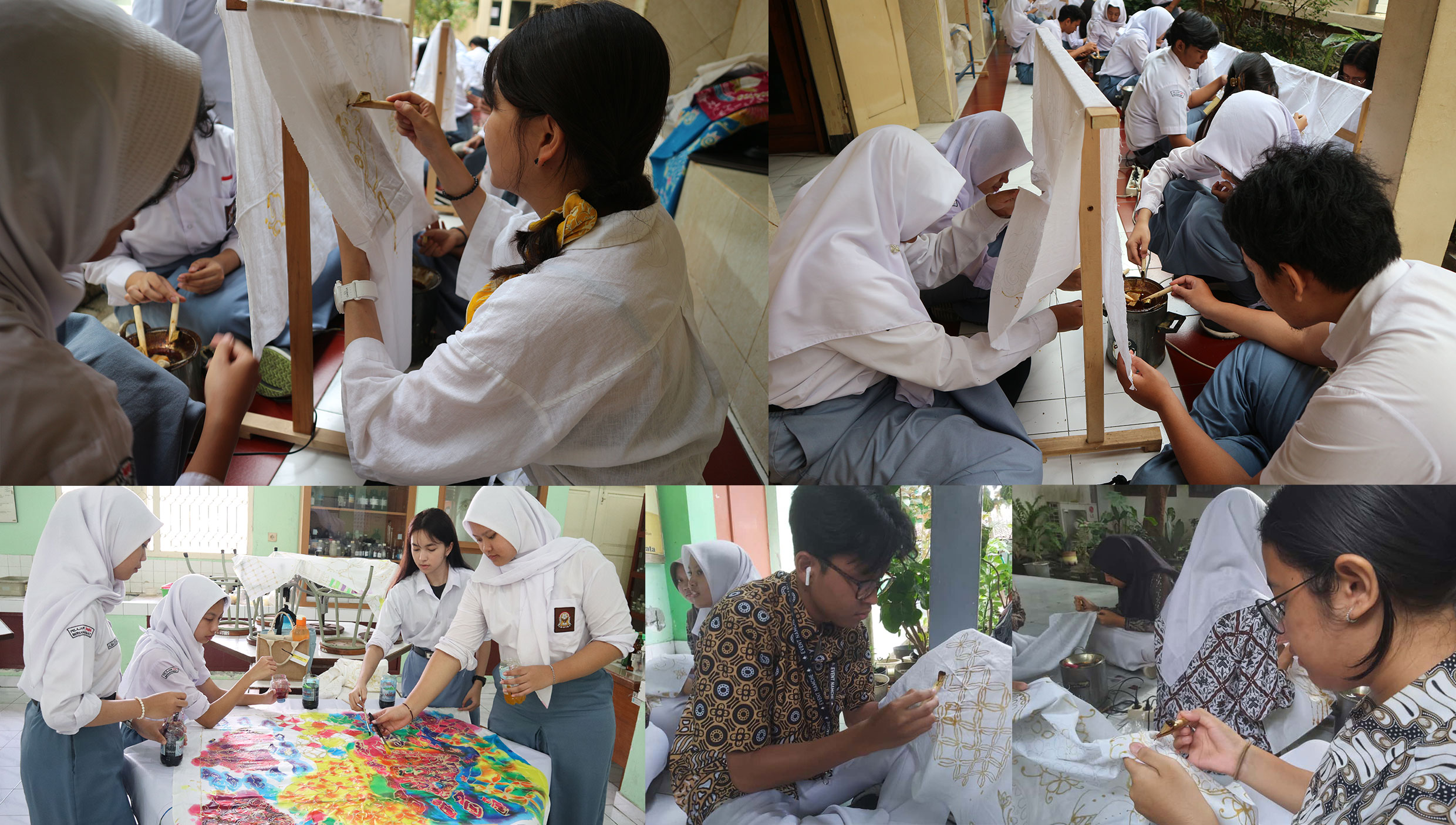
This pedagogical approach ensures that students are not only engaging in a cultural practice but are also guided to fully appreciate the inherent noble values contained within batik as an identifier of the Indonesian nation.
Batik as a Tool for Character Development
SMA Negeri 6 Yogyakarta leverages batik instruction as a regular and structured component of its Arts and Culture studies, recognizing its profound potential beyond craftsmanship in developing the students' character comprehensively.
- Cultivating Patience and Meticulousness: The intricate process of batik—from sketching patterns and applying hot wax (malam) to the dyeing process—demands intense concentration, patience, and meticulous care. Students learn the necessity of thoroughness, as even minor errors can significantly compromise the final outcome, thereby honing their sense of discipline and responsibility.
- Fostering Creativity and Self-Expression: In designing their motifs, students are granted the freedom to innovate while maintaining reverence for traditional values. This freedom builds self-confidence, enhances creative thinking capabilities, and encourages the boldness to express ideas visually.
- Instilling Cultural Pride and Nationalism: Through structured lessons on the philosophy of batik and the critical role of local culture, students naturally develop an awareness of their national identity and a sense of pride in being part of the Indonesian nation.
- Building Teamwork and Tolerance: Many batik sessions involve collaborative group work where students assist and provide feedback to one another. This serves as an excellent platform for learning effective teamwork, fostering tolerance, and improving interpersonal communication.
- Establishing Work Ethic and Discipline: From the initial design stage to the final production of the finished textile, students are required to complete their tasks punctually and according to set standards. This experience instills a critical work ethic and discipline essential for success in real-life contexts.
Collaboration with the Jogja International Batik Biennale (JIBB)
The school’s cultural preservation efforts are significantly augmented through a valuable partnership with the Jogja International Batik Biennale (JIBB) Goes to School program. This collaboration is integral to JIBB's mission to engage younger generations through direct educational outreach in schools.
The JIBB Goes to School initiative has consistently enriched SMA Negeri 6 Yogyakarta with various cultural activities, including:
- Professional Workshops: Batik workshops led by experienced professional artisans, allowing students to learn cutting-edge techniques directly from industry practitioners.
- Student Fashion Shows: Showcasing student-created batik pieces in a fashion context, demonstrating the adaptability of batik to modern, appealing designs.
- Cultural Discussions: Dialogues focusing on cultural heritage and preservation, broadening students' perspectives on the importance of sustaining their culture amidst the challenges of globalization.
This collaboration not only strengthens the academic learning process but also provides students with invaluable direct experience and a platform to proudly appreciate their own creative achievements.
Shaping a New Generation of Cultural Custodians
Through contextual and enjoyable learning, such as batik instruction and collaboration with cultural institutions like JIBB, SMA Negeri 6 Yogyakarta successfully instills core cultural values in its young population. This comprehensive activity effectively molds students into individuals who are creative, culturally aware, and highly conscious of the necessity to preserve their national heritage.
The batik products created by students are not merely coursework; they are frequently featured in art exhibitions, school fashion shows, and are even utilized as official school souvenirs for national and international events.
Conclusion
In an era of globalization rife with cultural challenges, concrete actions like those undertaken by SMA Negeri 6 Yogyakarta in partnership with JIBB are immensely significant. Revitalizing batik within the school environment is more than a technical lesson; it is fundamentally about inculcating a deep sense of pride in one's own culture.
It is anticipated that through this sustained program, students will evolve into cultural custodians who not only comprehend the history of batik but are also adept at innovation, capable of carrying this tradition onto the global stage. For it is from the hands of this youth that Indonesian batik will continue to thrive and remain deeply rooted in its homeland while simultaneously reaching out to the world.
(Mohamad Budi Hardyantoni, S.Pd)